


International Human Rights Day: Young Voices on Courage, Protection and the Future of Human Rights
Each year on International Human Rights Day (10 December), the world reflects on the promise of dignity, freedom and justice for all. This day marks the adoption of the Universal Declaration of Human Rights (UDHR) in 1948, a landmark moment that set out the fundamental rights and freedoms everyone is entitled to. This year, Justice & Peace shines a light on the voices of young people who are not only learning about human rights, but actively shaping its future through the Move 4 Human Rights (M4HR) Youth Trajectory for Change.
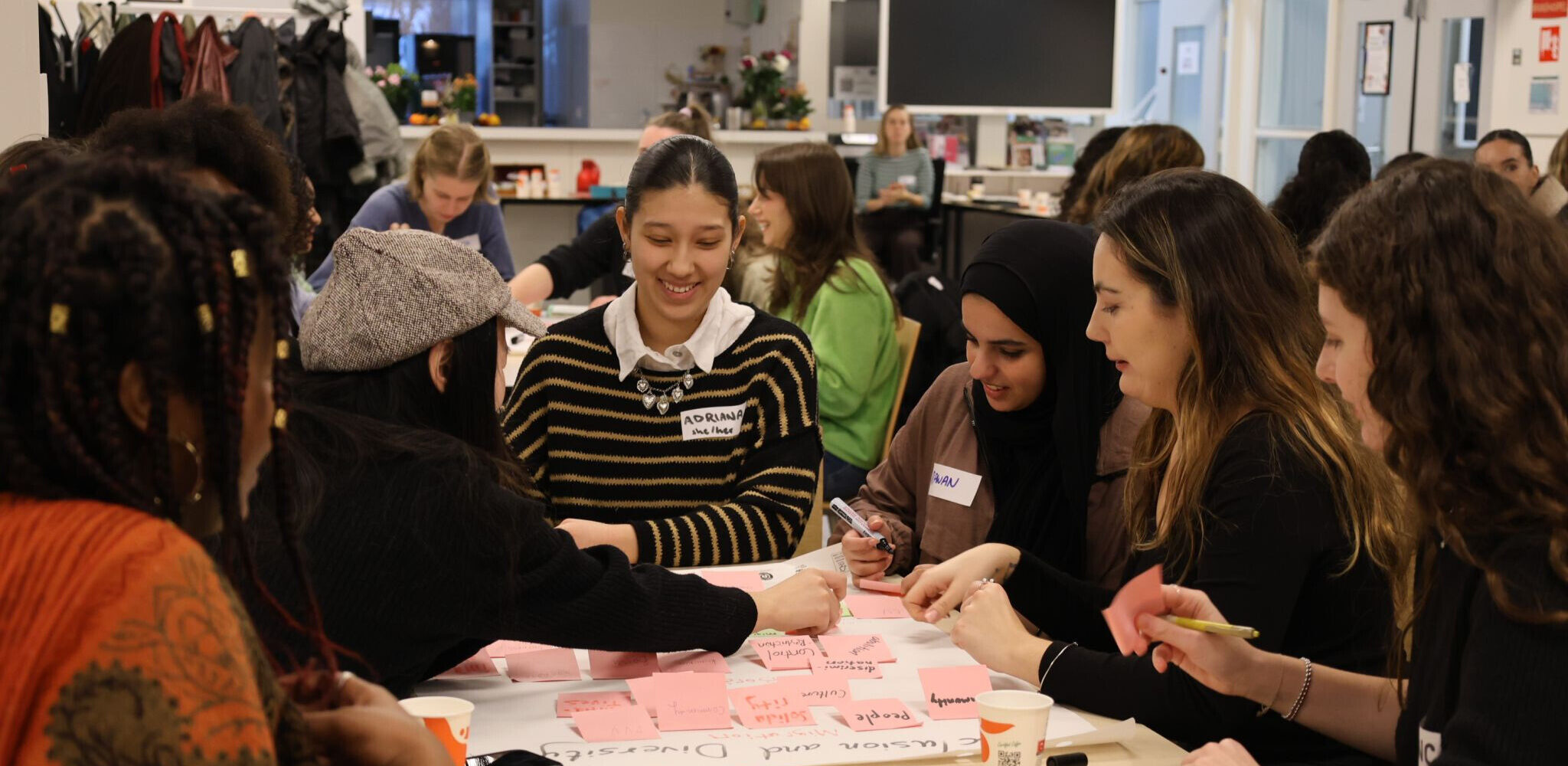
Last October, more than 70 young participants began their journey in the M4HR: Youth Trajectory for Change. Over the past weeks, they have come together to learn, exchange experiences and reflect on the realities of human rights today. During recent sessions, participants explored the shrinking space for human rights work worldwide, while also looking closely at migration and inclusion in the Netherlands – discussing the lived realities of refugees, undocumented people and migrant communities, and the growing need for protection, solidarity and international cooperation both locally and globally.
In the lead-up to International Human Rights Day, three participants – Edgar Kaiser, Marcy Kitungu and Martha Elias – share what this day means to them, what concerns them about the state of human rights, and why they feel called to take action.
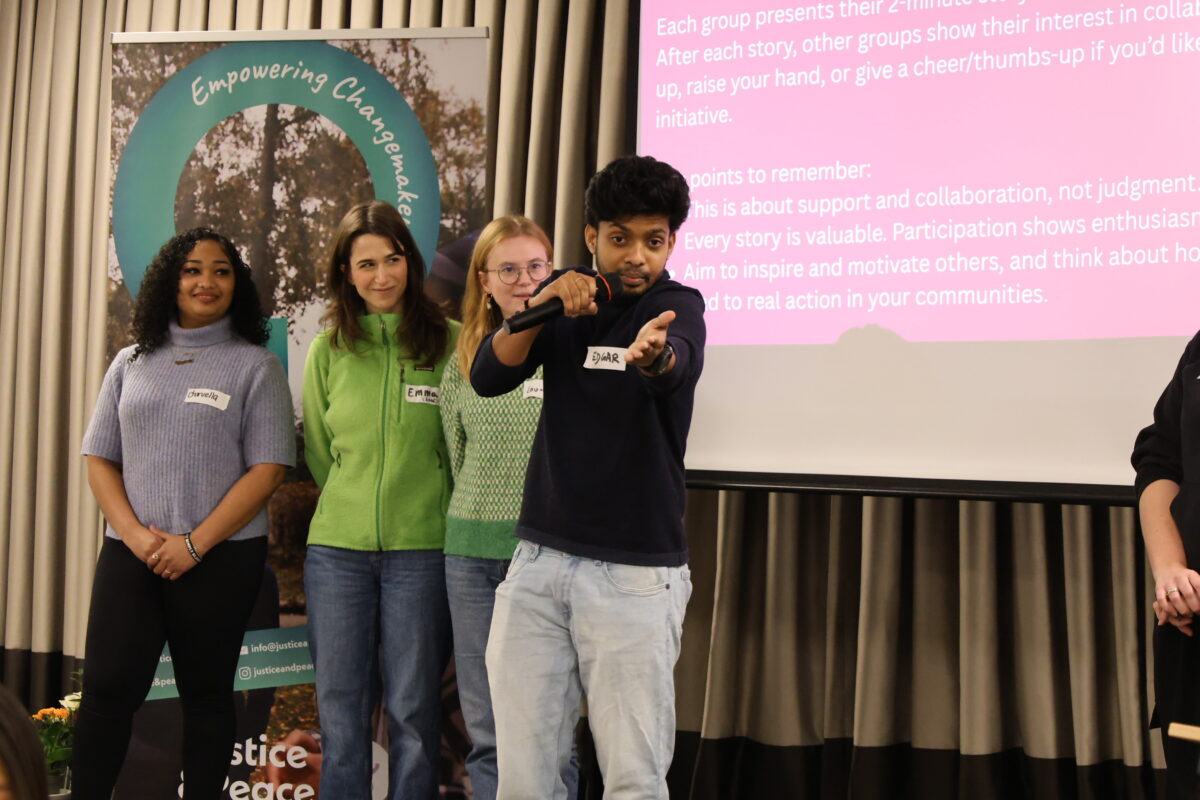
Edgar Kaiser during the Storytelling training (2025)
Safe spaces can be lifesaving
For Edgar, the reality of human rights work is inseparable from risk. He speaks about the growing dangers faced by human rights defenders across the globe. “One of the biggest challenges today is that governments are increasingly becoming authoritarian,” he explains. “They are using democratic processes to erode the fundamental notions of democracy and human rights.”
He connects this reality to the work of Justice & Peace’s Shelter City programme. “That is why Justice & Peace has come forward with this project of Shelter City for Human Rights Defenders at Risk across the globe,” Edgar shares, emphasizing how vital safe spaces are when threats, intimidation and reprisals become part of daily life for activists.
“Supporting undocumented migrants, supporting someone learning the local language, giving a word of strength. Solidarity is something everyone can practise every single day.”
At the same time, Edgar also emphasizes that human rights are defended not only through institutions, but in everyday acts of solidarity. “It can be a very simple act of kindness,” he says. “Supporting undocumented migrants, supporting someone learning the local language, giving a word of strength. Solidarity is something everyone can practise every single day.”
We should not be told to wait
For Marcy, the challenge lies closer to home: being taken seriously as a young person. “I think one of the biggest challenges young people are facing is that they’re not being entirely taken seriously,” she says. Too often, young people are told to wait their turn, to gain more experience, to stay silent until they are older.
“We cannot look the next young generation in the eye and say: I did nothing.”
Yet, as she points out, it is young people who will inherit the consequences of today’s decisions. “The world with all her beautiful things and all her awful problems is the one that young people will be inheriting,” Marcy reflects. “We cannot look the next young generation in the eye and say: I did nothing.”
She believes real change starts with participation: not only in formal classrooms, but in daily life. Education, for her, is a mindset: a commitment to remain curious, critical, and engaged with the world.
Young people need safe spaces to be heard
Martha’s focus lies on the spaces that are missing: safe environments where young people can speak freely without fear of judgement or punishment. “Young people haven’t gotten enough safe space to express themselves without being judged,” she says. In many countries, speaking up comes at a high cost. Protests are met with violence, and young activists are silenced rather than heard.
“If we come together as young people and build community, we can create a space where everyone belongs.”
Still, Martha carries a strong belief in the power of collective action. “If we come together as young people and build community, we can create a space where everyone belongs,” she shares. She emphasized storytelling, digital platforms and youth-led initiatives as tools for connection and change.
A generation rooted in hope
Despite describing a world of shrinking freedoms, growing polarisation and increasing risk, all three participants shared a striking sense of hope. “I strongly believe that we are heading towards a brighter world,” Edgar says, “especially when young people hold hands and say: we are not alone in this battle.”
Marcy believes that today’s struggles are shaping a generation that understands exactly why human rights matter. Not in theory, but in practice. And Martha dreams of a future where every life matters, every voice is heard, and no one has to fight to be seen.
On this International Human Rights Day, their voices remind us that human rights are not abstract principles, but lived practices – built through courage, solidarity, protection, and the daily decision to stand with one another.