


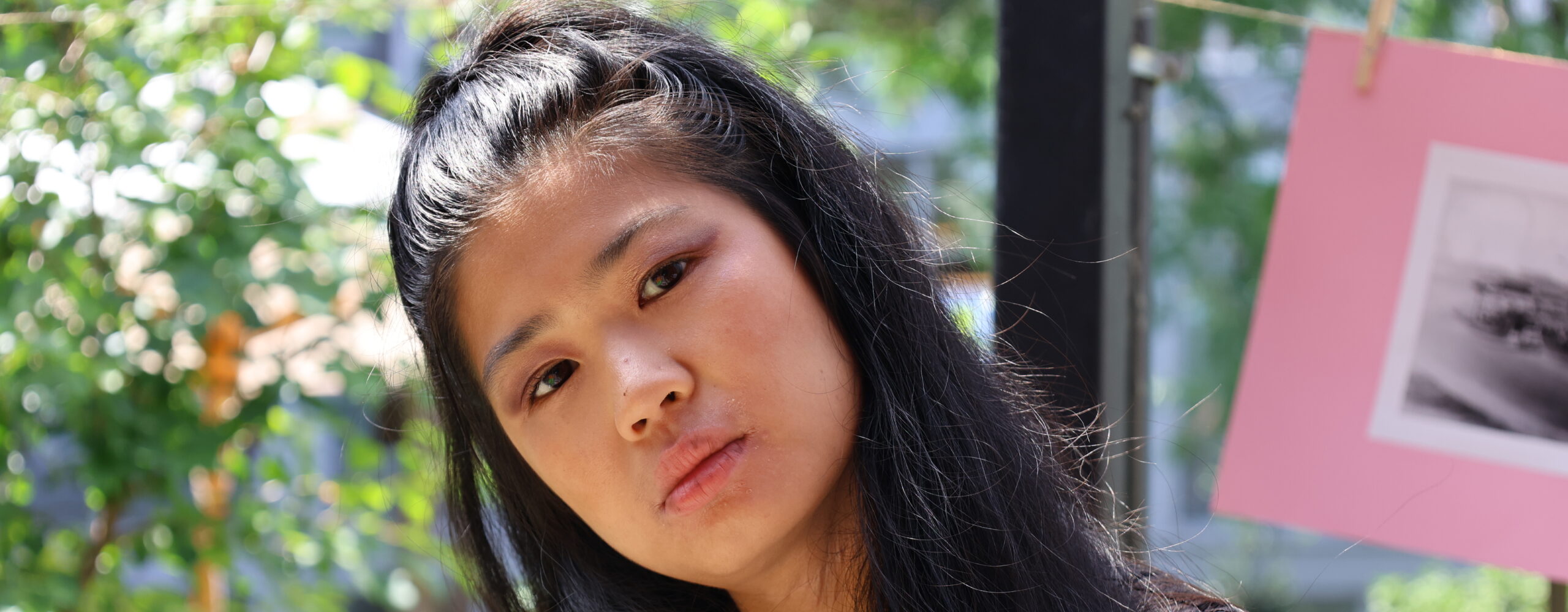
Kai, defending LGBTIQA+ rights in Indonesia through musical storytelling
Kai Mata is a musician, activist, and public speaker from Indonesia. She uses her voice to advocate for queer rights, women’s empowerment, and minority visibility in Indonesia and beyond. Her purpose is to raise awareness and inspire change by embodying resistance and celebrating queerness. In the Summer of 2025, she stayed in the Netherlands as a resident of the Artists’ Safe Haven initiative (ASHI).
Motivation for joining ASHI
The main motivation for Kai to take part in the Artists’ Safe Haven initiative was to find a space to reconnect with her creative flow after a period of intense travelling. As recipient of the 2024 Artivist Award, Kai had the opportunity to spend a year as Resident Practitioner across different campuses across the world (Global Campus of Human Rights, Auschwitz Institute, and The Institute for Genocide & Mass Atrocity Prevention), working on theoretical and practical aspects of art and activism together with graduate students.
As rewarding as this journey was, Kai felt the need to slow down and shift her focus back to her music, something she was able to do during her three months stay in the Netherlands. This also allowed her to undergo a creative journey while distancing herself from the discriminatory practices queer people are often subjected to back in Indonesia.
Kai’s experience in the ASHI program
Next to offering the space to reconnect to her creative process, ASHI gave Kai access to valuable training and networking opportunities. She took part in capacity-building training and knowledge exchange practices with other human rights defenders, whom she enjoyed connecting with. These trainings focused on digital security, activist care, and collective memory.
The ASHI programme offers networking opportunities with people and projects tailored to the artists’ preferences. Kai took the chance to build upon her already existing network in the Netherlands by meeting with professors, NGOs, and other organisations. She was able to explore partnerships for supporting her project, Bangga di Bali (Proud in Bali), in Indonesia and brainstorm about her possible participation in a variety of events in the Netherlands in the future.
Wellbeing and self-reflection
Rest was intentionally woven into Kai’s three-month residency in the form of curiosity and exploration. She took tango classes, as well as drum and piano lessons. Kai described how the feeling of being a beginner again and learning new skills in a playful way recharged her with joy. In addition, she also spent a great amount of time in public libraries, as she explained that they are not as widespread and well-equipped in Indonesia. So, she found herself reading and exploring in the libraries of Utrecht, The Hague and Amsterdam. By taking classes, exploring cities, going to markets, learning new Dutch words, and receiving psychosocial support, she slowly, unexpectedly, found herself falling in love with the Netherlands:
“Getting to experience spontaneity and play without being scared of being observed, being able to go to a volleyball game, hanging out with different people and going around with the Justice & Peace interns was all very valuable and fun”
 Through the Artists’ Safe Haven initiative, Justice & Peace contributes to the promotion of freedom of artistic expression globally, including the right to create, admire, critique, challenge, and respond to art, free of governmental censorship, political interference, or pressure from non-state actors. By providing temporary relocation and tailor-made support to artists at risk, the initiative reinforces their work and supports them to expand their networks, reclaim civic and artistic spaces, and contribute to the creation of a fair world.
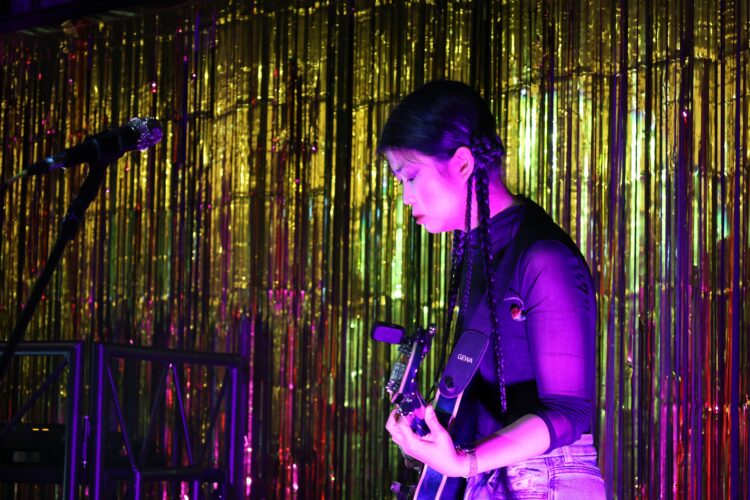
LGBTIQA+ activist Kai performing at The Social Hub The Hague
Overall reflections and artivism
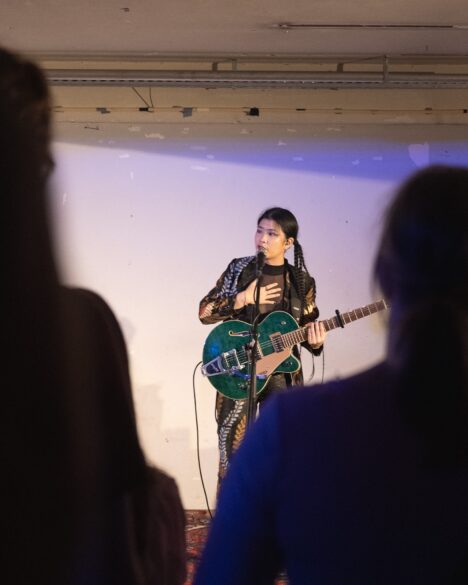
Experiencing different levels of freedom as a queer woman inspired Kai to conceptualise her final show, “Kai Mata’s Bad Boy Era.” The intimate performance took place at The Social Hub in The Hague. Through playful storytelling and the debut of new songs, she shared reflections from her time in the Netherlands. This was not her only performance during the residency. Kai was also found at ALab Amsterdam, Indonesia’s Independence Day at Amare in The Hague, and you may have spotted her on the Asian Pride boat at Pride Amsterdam. In addition, a key event during her stay was speaking at CoC Nederland’s Pride Worldwide panel in July.
Kai’s experience in the Netherlands powerfully embodies the essence of artivism, where art and activism exist as one. Kai describes that art serves as a bridge, carrying urgent sociopolitical messages beyond activist and academic “bubbles” and into the broader public sphere where we can spark curiosity, empathy, and action.
“Art has always been an integral part of any social movement. We are frontliners with the power to ignite populations into a more open mind and change of heart”
She highlights how traditional institutions like NGOs and academia commonly claim that it is a challenge to reach beyond predefined audiences or professional circles. Art, however, has the capacity to travel organically across social, cultural, and demographic boundaries. For Kai, there is an urgency to embrace the identity of an artivist, take pride in it, and share it boldly with the world.