


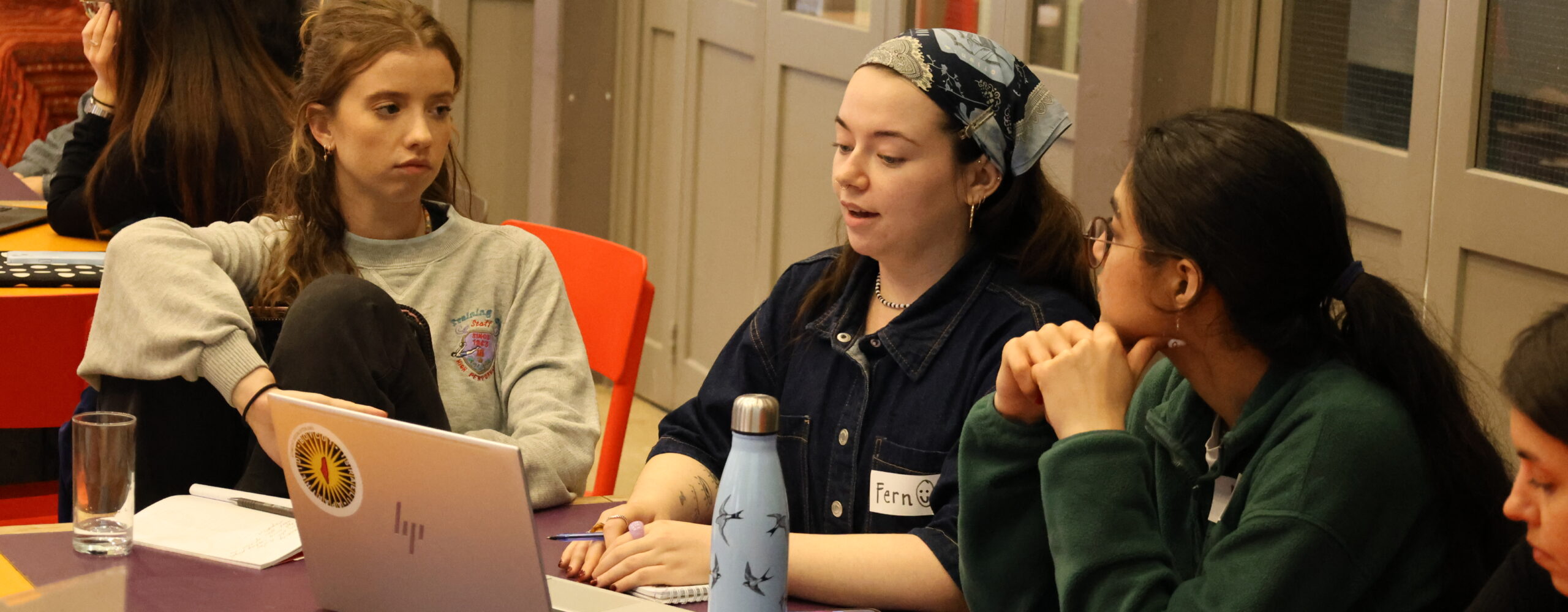
Rachel, turning research into tangible impact
Rachel Hierholzer joined the Hague Changemakers: Impact Through Research trajectory – part of the Move 4 Human Rights initiative – to explore how academic research can be transformed into social impact. Drawing on her background in Conflict Studies and Human Rights, she worked with others to challenge dominant narratives around migration and amplify underrepresented voices.
Rachel Hierholzer (24) holds a master’s degree in Conflict Studies and Human Rights from Utrecht University. With a passion for social justice and a critical eye on how migration is framed in public discourse, she found a natural next step in joining The Hague Changemakers: Impact Through Research – a trajectory organised by Justice & Peace as part of the Move 4 Human Rights initiative (MDT). “I wrote my thesis on migration and the media,” Rachel shared. “I was looking at European-based news articles and how they represent migrants, and how that ties into exclusionary EU migration policies. That’s why I was drawn to this programme. It offered a way to take those questions beyond the academic setting.”
Rachel describes herself as empathetic and conscious, guided by a deep awareness of how her actions affect others. That sense of social responsibility, combined with a creative mindset, led her to seek work that moves ideas into action – something the trajectory offered. “Academic research is important, but it can feel abstract and disconnected,” she explained. “I wanted to do something more tangible – something that results in real impact, where you can see the outcome.”
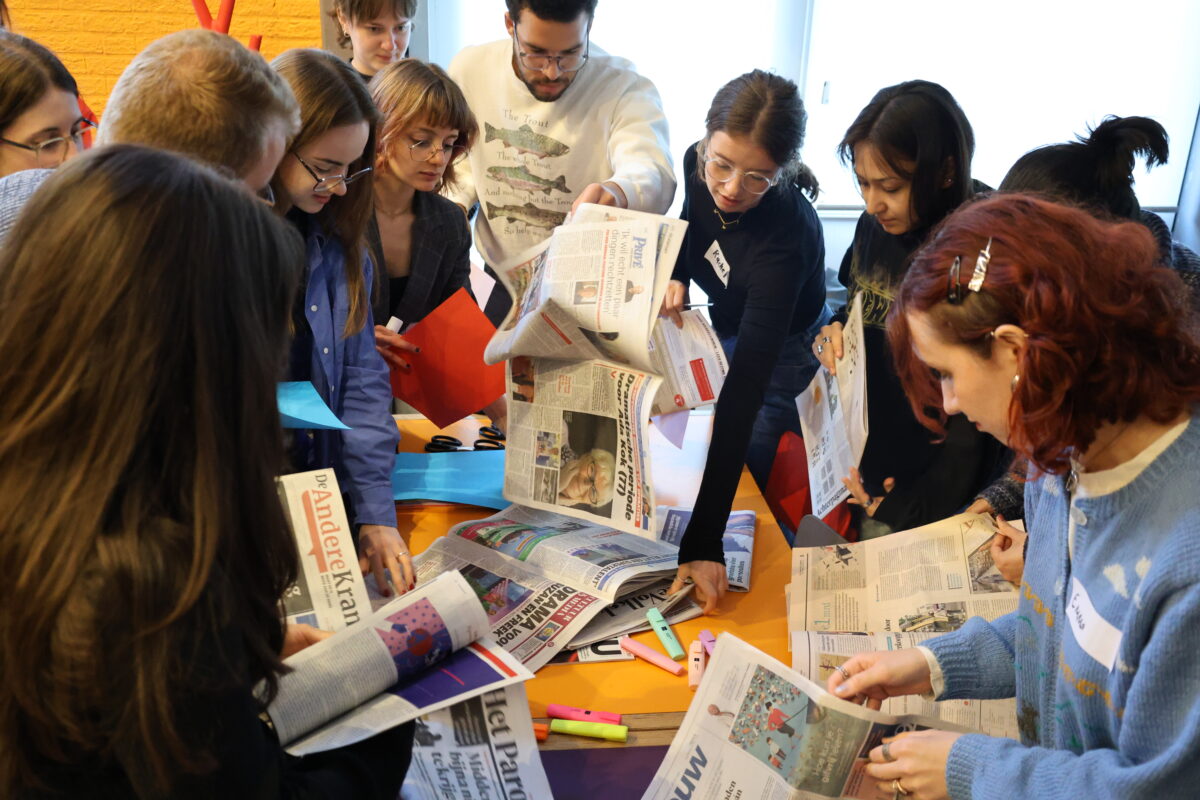
The Hague Changemakers – Intercultural Dialogue Training (2025)
Learning through collaboration
From the beginning, Rachel appreciated the transparent and respectful structure of the programme. She described the balance of workload and expectations as realistic and empowering, which allowed her and her team to fully engage in the co-creative process without feeling overburdened. “It was never just about sitting behind a desk to write a paper,” she said. “We interacted with other people, collaborated, created. That process made the work more meaningful.”
“We all care about the cause, but it’s different when you actually speak with people who are directly affected. It grounds your work and gives it depth and perspective.”
One of the most valuable aspects of the experience, according to Rachel, was connecting with people with lived experience – newcomers whose voices are too often absent in the very debates that concern them. “We all care about the cause,” Rachel said, “but it’s different when you actually speak with people who are directly affected. It grounds your work and gives it depth and perspective.”
The interviews her team conducted highlighted a common concern: misrepresentation in mainstream media. Many participants felt their identities were flattened to harmful stereotypes or reduced to narratives of victimhood. “They told us, ‘We’re not being accurately represented.’ That was pivotal – it shifted our project. Instead of doing an in-person event, we focused on showcasing real stories and promoting media literacy.”
From misrepresentation to media literacy
Rachel’s group centred their project on the media portrayal of migrants and refugees in the Netherlands. Their goal? To unpack and challenge the dominant narratives by sharing lived experiences and equipping people with tools to read media more critically.
“Migrants are students, workers, mothers, artists. They have lives and identities that go beyond the headlines.”
“Yes, there are negative portrayals – but what’s the alternative? What stories are not being told?” Rachel asked. “Migrants are students, workers, mothers, artists. They have lives and identities that go beyond the headlines.”
They curated resources, collaborated with migrant-led media platforms, and designed accessible guides for media literacy, inviting readers to pause, question, and look beyond sensationalism. “Even someone who isn’t informed in this field can start asking critical questions. That’s where change begins,” she said.
Challenges and shifts
The journey wasn’t without challenges. One of the key organisations they initially partnered with dropped out unexpectedly, forcing the group to pivot and refocus their approach mid-way through the process. “We had to rethink our next steps quickly,” Rachel recalled. “Luckily, we got to work with Dare to Be Grey, who we met through the programme, and explore how polarisation plays out in media. So in the end, it actually deepened our project.”
Another challenge was resisting the pull of academic habits. “Most of us had academic backgrounds, so we defaulted to doing research like we were writing a paper,” she said. “Eventually, we realised we needed to approach it differently. More hands-on, more grounded in community impact.”
This, Rachel noted, was a key learning moment. She encourages future participants to define their project direction earlier in the process, to leave more time for implementation and creativity.
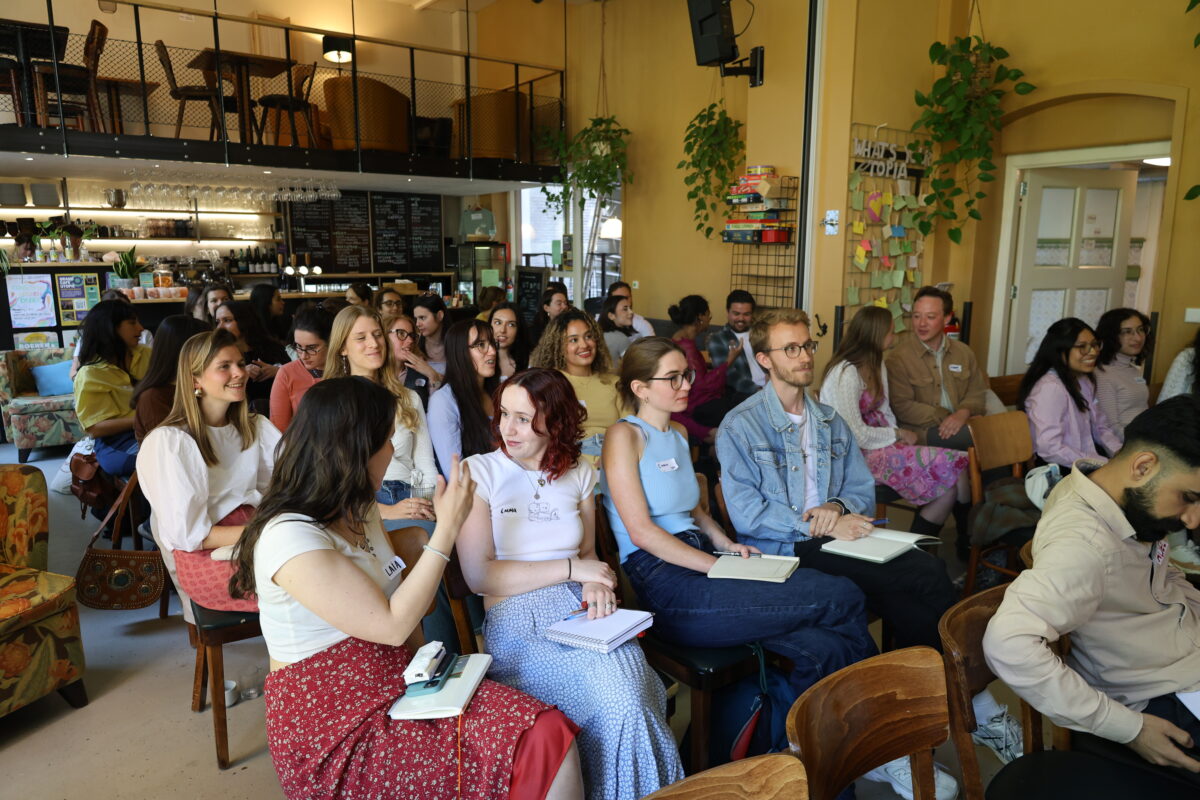
The Hague Changemakers – Polarization training (2025)
Looking ahead
Rachel remains passionate about shifting narratives through media. She hopes to work on larger-scale storytelling platforms that highlight diverse voices and challenge dominant frames. “There are so many exciting media initiatives out there – migrant-led magazines, platforms focussed on social justice, beautiful design-led storytelling,” she said. “That’s the space I want to be in.”
Though she recognises that changing mainstream media will take time, Rachel remains hopeful. “It’s a long road. The big platforms won’t change overnight. But I believe smaller, community-led media outlets can lead the way – and social media offers a space to amplify alternative stories.”
“If you want to do something meaningful and community-based without needing to commit full-time, The Hague Changemakers is a great place to start.”
Why the Hague Changemakers?
Rachel wholeheartedly recommends the trajectory to others. “It’s flexible, accessible, and actually impactful,” she said. “If you want to do something meaningful and community-based without needing to commit full-time, The Hague Changemakers is a great place to start.”
More than just a project, the experience helped her grow – both professionally and personally. “It shifted my mindset from research for research’s sake, to research with real-world impact,” she concluded. “And that’s something I’ll carry with me.”